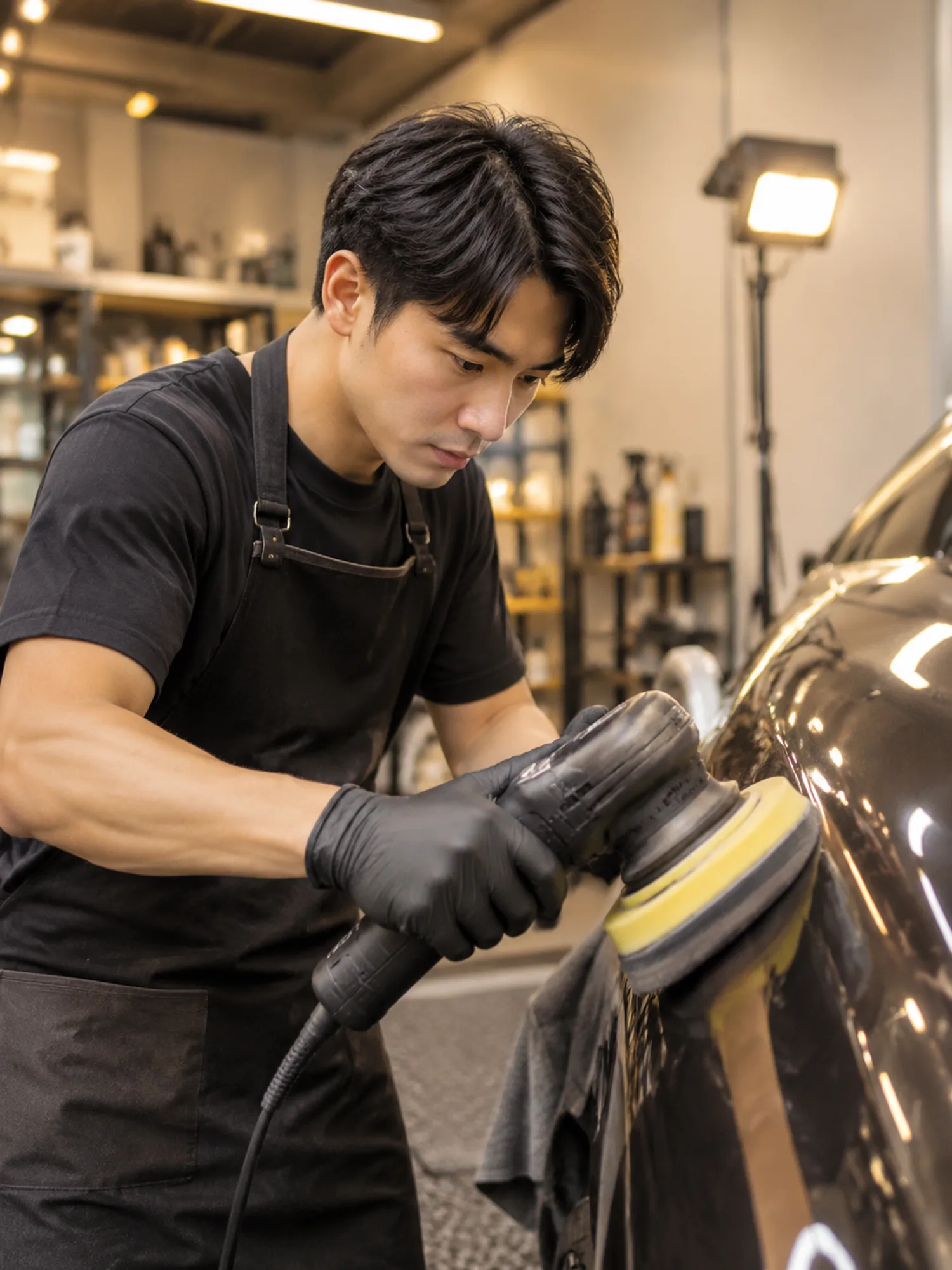
Good detailing is mostly about sequencing. Do the dirty jobs before the clean ones, and never drag contamination back onto a surface you have already prepared.
The sequence
1. Wheels and tyres
Start with the dirtiest part of the car. Wheel cleaner and brake dust should never be sprayed onto a panel you have just cleaned. Use a dedicated pump sprayer, soft brushes for spokes and lug recesses, and a wash media that never touches paint again.
2. Pre-wash
Apply snow foam with a foam cannon, allow it to dwell in the shade, then rinse from the top down. This removes the loose grit that would otherwise be ground in during the contact wash.
3. Contact wash
Two buckets, a plush wash mitt, straight lines and light pressure. Work from the roof down and rinse the mitt between every panel.
4. Chemical and mechanical decontamination
After rinsing, feel the paint through a thin plastic bag. If it is gritty, use an iron remover and then a fine-grade clay bar with plenty of lubricant. Clay is a preparation step, not a weekly habit.
5. Dry
A large, high-pile microfiber towel and a single slow pass per panel. Blot rather than rub. Use a separate towel for door jambs and lower panels.
6. Polish and protect
Only now, on a clean and dry surface, do you polish or apply wax, sealant or a coating. Any protection applied over contamination simply locks it in.
7. Glass, trim and final wipe
Finish with a clean edgeless towel, dedicated glass cloth and a last walk-around in different light to catch residue in panel gaps and around badges.
A simple rule to remember
Dirty to clean, wet to dry, top to bottom, and least delicate to most delicate.
Whenever you are unsure whether a step comes before or after another, ask which one could re-contaminate the other. The one that makes a mess goes first.