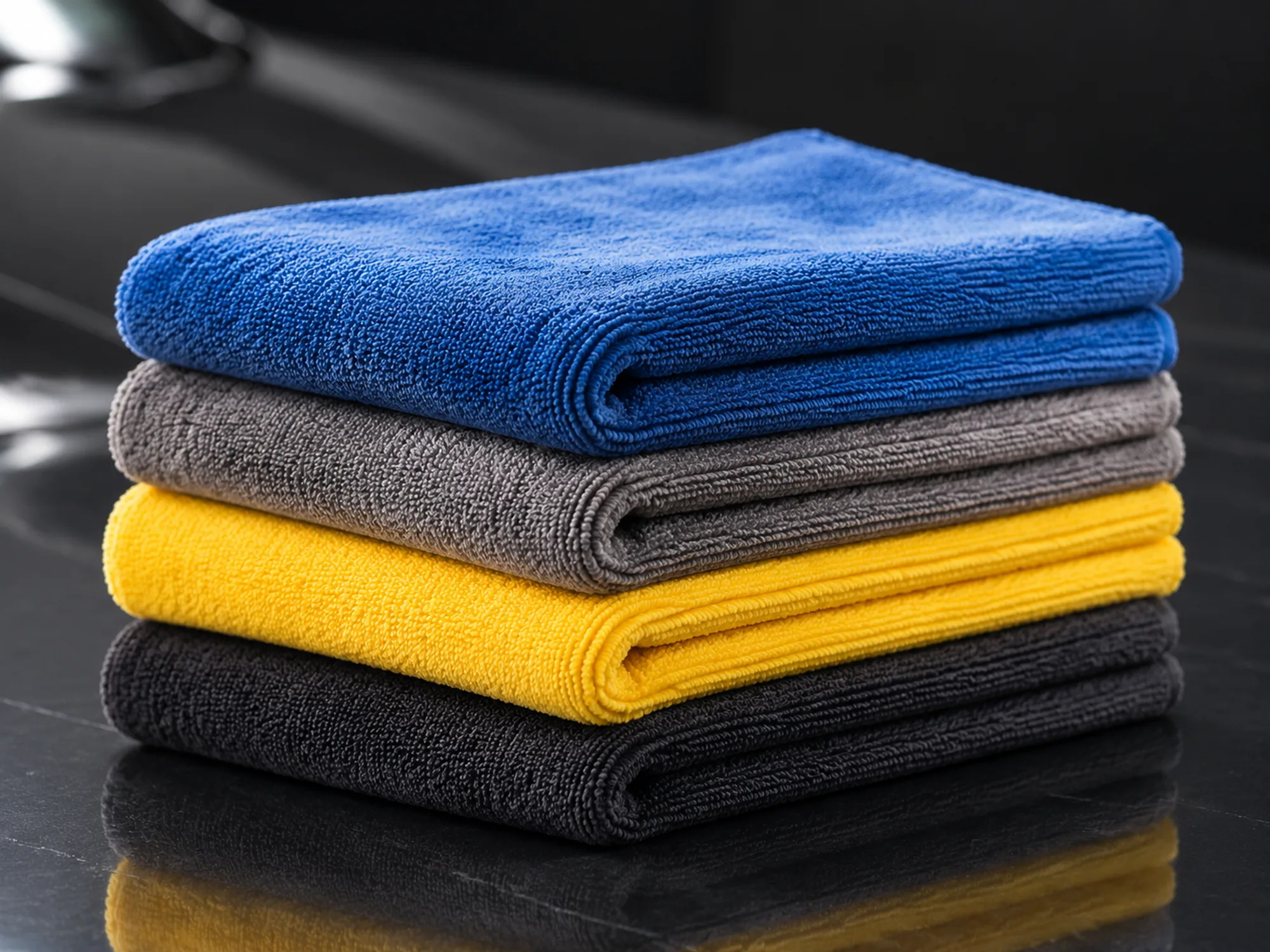
Microfiber works because each fibre is split into microscopic channels that pull water and dirt in. Almost everything that ruins a towel does so by clogging or melting those channels.
The short version
Wash microfiber separately, with microfiber detergent, in warm water, with no fabric softener, and dry on low heat or air.
Why separation matters
Keep towels away from cotton
Cotton lint migrates onto microfiber in the wash and then onto your paint. Once a towel is linting, it is very hard to bring back.
Keep drying towels away from wash media
A wash mitt may still contain fine grit even after rinsing. Washing it with your drying towel re-deposits that grit into the fibres that will touch dried paint.
Sort by job
A simple three-bag system works well: paint/drying towels, glass and interior towels, and greasy or wheel towels. Colour-coding the towels makes this effortless.
The washing routine
- Shake out loose debris and pre-treat heavy polish or sealant residue.
- Use a dedicated microfiber detergent — not a heavy-duty powder or a 2-in-1 with softener.
- Choose a warm cycle with an extra rinse. Very hot water can deform synthetic fibres.
- Skip fabric softener, dryer sheets, bleach and any product labelled “wash & wax”.
- Air dry, or tumble on the lowest heat setting. High heat melts the split tips.
Troubleshooting
| Symptom | Likely cause | Fix |
|---|---|---|
| Towel no longer absorbs | Fabric softener or high heat | A hot wash with microfiber detergent may restore some absorbency |
| Towel leaves lint | Washed with cotton | Rewash alone and retire it from paint duty |
| Towel feels stiff | Detergent build-up | Add an extra rinse, use less detergent |
| Streaks on glass | Residue or a contaminated towel | Keep a dedicated glass towel, washed separately |
When to retire a towel
If a towel has been dropped on the ground, feels permanently gritty after washing, or has picked up a chemical that will not rinse out, demote it to wheel or engine-bay duty. Paint towels are cheap compared with paint correction.